Eau-forte, 1979
Signée à la main par l'artiste
Tirage : 97/100
Catalogue : [Encrevé 37]
Certificat d'authenticité
Condition : L’oeuvre est en très bon état
Papier légèrement jauni
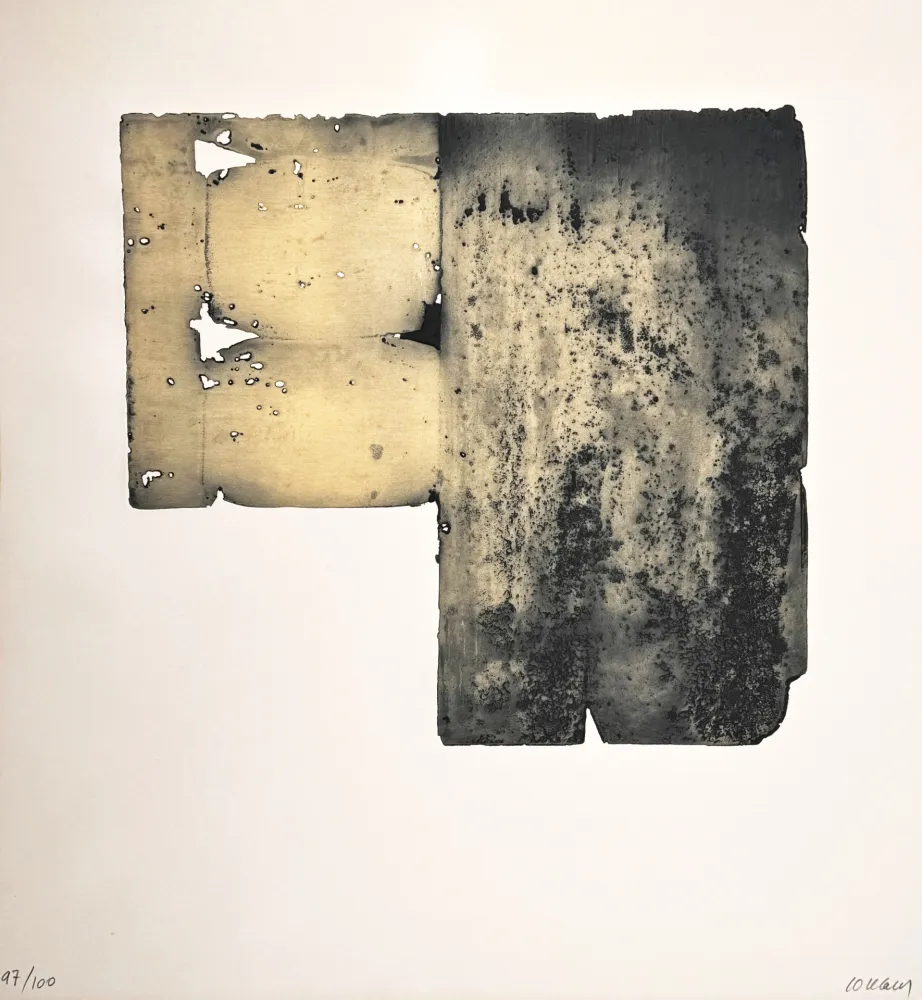
L’eau-forte permet à Soulages d’explorer une matière qui n’est jamais seulement un moyen, mais le cœur même de l’œuvre. Le cuivre est soumis à l’érosion, et cette transformation devient le principe créateur. Le geste du graveur consiste à retirer, à entamer la surface, afin de faire apparaître ce que la matière contient déjà en puissance. La plaque porte ainsi les marques d’une durée : les textures, les accidents et l’horizontalité de la forme donnent l’impression d’une surface lentement travaillée.
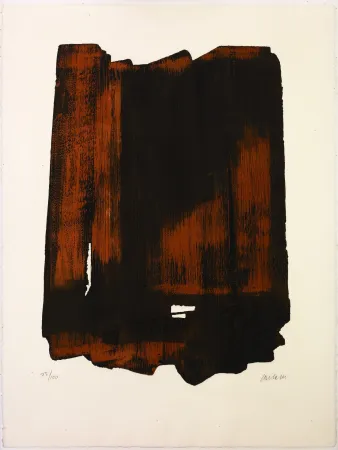
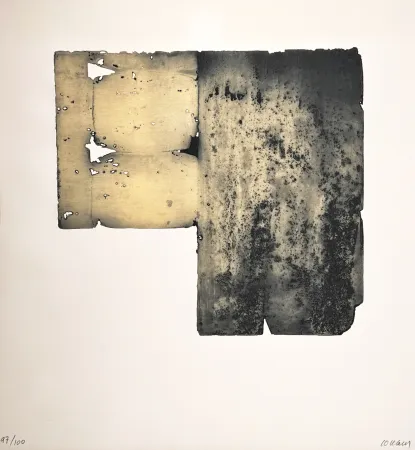
Cette relation entre gravure et matière atteint une forme d’aboutissement dans l’Eau-forte XXXV (1979). Son encrage « en noir et mordoré » donne au cuivre une présence presque incandescente. Le mordoré paraît moins être une couleur que la manifestation de la matière elle-même : l’éclat chaud du métal, observé sur la plaque par le graveur, semble passer directement dans l’estampe. L’impression conserve ainsi quelque chose du cuivre avant même qu’il ne devienne image.
LCD8499
— English —
Etching, 1979
Hand-signed by the artist
Edition: 97/100
Catalogue: Encrevé 37
Certificate of authenticity
Condition: the work is in very good condition
Paper slightly yellowed
Etching allowed Soulages to explore a material that is never merely a means but the very heart of the work. The copper is subjected to erosion, and this transformation becomes the creative principle: the engraver's gesture removes and breaks into the surface to reveal what the material already contains. The plate thus bears the marks of time — textures, accidents and the horizontality of the form suggest a slowly worked surface.
This relationship between printmaking and material reaches a culmination in Eau-forte XXXV (1979). Its inking in black and bronze gives the copper an almost incandescent presence. The bronze seems less a colour than the manifestation of the material itself: the warm glow of the metal, observed on the plate by the engraver, seems to pass directly into the print.